
Why do I Get Angry so Fast
(What's Really Going On In Your Head)
You didn’t mean to snap. One moment everything was fine, and the next something came over you. Suddenly, you have no control over your emotions. You’re saying and doing things that you don’t really mean.
Reflecting back, you realise that it was something small that set you off. Perhaps an unintentional comment, the way someone spoke to you, or something small not going your way that led to a massive fight or reaction.
Now you’re left wondering: How did I go from 0-100? Why do I get angry so fast?
If you’ve ever caught yourself asking that question, let me help you understand why you get angry so fast and what’s really going on inside your head. I promise you, the answer isn’t that you’re a bad person or that you have no self-control. It’s actually far more interesting (and fixable) than that.
To understand why you get angry so fast, you need to understand:
- Why do people get angry in general?
- 4 underlying reasons that create your emotional response (including anger)
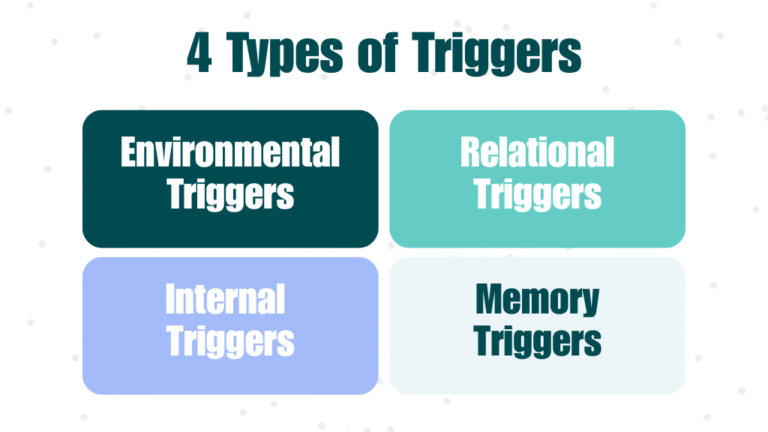
- 4 main categories of triggers
- The mental process of anger that pulls it altogether.
So let’s get to it, shall we?
Why Do People Get Angry?
You get angry to “protect” yourself
Anger is not a character flaw. It’s not proof that you’re difficult, unstable, or broken. Anger is actually one of your most natural, hardwired emotional responses, and understanding why it exists in the first place is the first step to changing your relationship with it.
At its core, anger is a protective emotion. It shows up when we feel threatened, disrespected, hurt, or when something we care about is on the line (very often our ego or self-esteem). For example, when somebody insults your partner or friend, you might get angry and defend them. If someone constantly interrupts you while you’re busy, you’ll probably get angry at a certain point.
Sometimes you might get angry to protect yourself from something that isn’t even a threat. For example, someone you care about might say something to you or about you that you interpret in a certain way. You see it as them blaming you, or trying to hurt or disrespect you, and so your mind and body default to responding in anger to respect you. If this happens repeatedly, especially because of the same person or event, you might start to respond in anger more quickly. Often, that anger also turns into resentment (which is a whole other web to untangle).
You get angry to “cover” something up
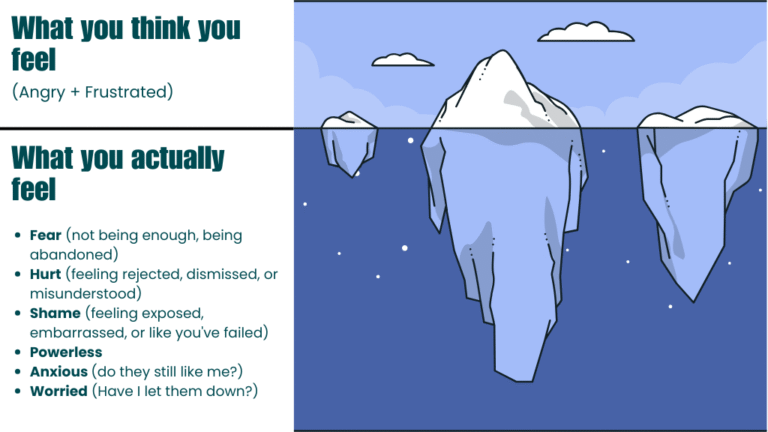
Here’s where it gets interesting. Anger is rarely the primary emotion. In most cases, it’s what surfaces when something deeper, and often more difficult to deal with, gets brought up. Underneath your anger, you might often find:
- Fear (of losing control, of not being enough, of being abandoned)
- Hurt (feeling rejected, dismissed, or misunderstood)
- Shame (feeling exposed, embarrassed, or like you’ve failed)
- Powerlessness (feeling like you have no control over a situation or outcome)
- Injustice (a strong sense that something is unfair or wrong)
So think of anger like a smoke alarm. It’s not the fire (the problem) itself, but it’s the signal (the smoke alarm) that something beneath the surface needs your attention.
The problem is that most of us were never taught how to treat anger like a signal. Chances are, people have mentioned your anger or temper more times than you can count, maybe even judged you for it, but they’ve probably never helped you understand what was going on behind your anger response.
4 underlying factors that make you get angry so fast:
Your Past
If you grew up in a home where anger was the primary way emotions were expressed, you learned to do the same (whether you tried to consciously or not). If you were raised in an environment where showing vulnerability felt unsafe, anger may have become your most reliable defence.
When you’re young, you learn emotional patterns from the people around you. As you grow up, you’ll find that you naturally tend to respond the way your loved ones respond when you start facing different situations that bring up strong emotions.
If you don’t consciously do something about this or intentionally decide to respond differently to situations, this continues into adulthood, where your responses become more intense because the roots of your emotions just become deeper and stronger.
Unresolved Emotional Wounds
Old hurt that was never properly acknowledged or dealt with doesn’t just disappear because you get older and move on. Think about those other emotions I mentioned earlier. You become primed and ready to be activated by anything that feels even remotely similar to what’s hurt you in the past that you haven’t properly dealt with.
- A partner who dismisses your feelings might feel the same as when a parent never listened to you.
- A colleague who takes credit for your work might echo an old feeling of being invisible.
- A comment on your looks or intelligence might bring up old feelings of being constantly compared negatively to kids at school or your siblings.
Your Current Stress Load
When your emotional capacity is already full, even small things cause you to react intensely.
Imagine a pressure cooker. Pressure slowly builds up over time, but a valve or outlet is needed to let excess pressure escape. If that doesn’t happen, eventually the pressure becomes too intense and something explodes.
The same is true for you and your emotional capacity. Each time something stressful happens or something that elicits a negative reaction in you, the pressure within you builds. Eventually, you get to a point where too much pressure will build up inside you, causing you to lash out in anger.
If you want to answer the question “Why do I get angry so fast?”, start by looking at your current stress load. Chances are, you’re either being affected by more than you think you are, or you think everything is “no big deal” when it actually is a big deal. Either way, take time-out and allow yourself to work through some of it (I promise you, you have enough time).
Core Beliefs
You might hold deeply ingrained beliefs that make you prone to respond in anger.
The most common ones I’ve seen in my sessions that cause anger are:
- “People don’t care about me”
- “I need to be in control”
- “I’m useless”
- “I’m not good enough”
- “I ruin everything”
These beliefs are always there in the background, creating the reality you experience. When a situation or person triggers one of these beliefs, your emotional response is immediate and intense. Sometimes it’s to prove people wrong, sometimes it’s to protect you, but almost always, it’s to cover up how you really feel. Most people don’t even realise these beliefs exist until they start doing the deeper work.
The triggers you might not be noticing
Triggers are the specific situations, people, or internal states that activate your anger response. I’m sure you’re probably aware of your biggest, most obvious triggers. But it’s likely that you may have some blind spots (we don’t always notice our own triggers).
Environmental Triggers
These are the external conditions that create slight but consistent pressure that make you more reactive than usual.
- Heavy traffic, noise, or crowded spaces
- Feeling rushed or running behind schedule
- Disorganised environments or constant interruptions
Ask yourself: Do I notice I’m shorter with people when I’m in certain environments? When I’m at the office vs at home? On certain kinds of days?
Relational Triggers
These often carry the most emotional charge because they connect to our deepest needs: to feel seen, respected, loved and valued.
- Feeling dismissed or talked over in a conversation
- A partner who doesn’t acknowledge your effort
- A colleague who takes credit for your work
- Someone questioning your decisions or competence
Ask yourself: Is there a particular type of person or situation that consistently triggers me? What is it about that situation that makes me feel angry? (This question uncovers hidden emotions – because the answers often point to other emotions besides anger)
Internal Triggers
These are the internal physical and emotional states that lower your tolerance before anything external has even happened.
- Tiredness or poor sleep
- Hunger (being “hangry” is real and physiological)
- Feeling anxious or already on edge (think tight deadline, feeling like you’re already stretched thin, or when you know something important is coming up that you’re a little nervous about)
- Carrying unresolved tension from earlier in the day (someone already snapped unprovoked at you, or didn’t acknowledge your efforts)
Ask yourself: Have I slept well? Have I eaten? What’s happened this week/today that’s bothered me? What is it about that moment that bothered me?
Memory Triggers
These are the most subtle, yet most powerful. A situation in the present echoes something painful from the past. You end up responding to the memory/feeling that the present moment brings up, along with what’s actually happening (this is probably the biggest reason you might be going from 0-100 over something trivial).
- A certain tone of voice that reminds you of a parent
- Being left out of a decision at work, echoing childhood feelings of powerlessness
- Being corrected in public, activating old feelings of shame or humiliation
Ask yourself: What does this situation or feeling remind me of? Have I felt this way before? When have I felt this way before? What can I learn from that moment, looking back at it now?
The Mental Process that answers the question: Why do I get angry so fast?
Between the trigger and your anger response, there are steps that happen so fast they feel invisible. Understanding those steps allows you to start interrupting and changing them
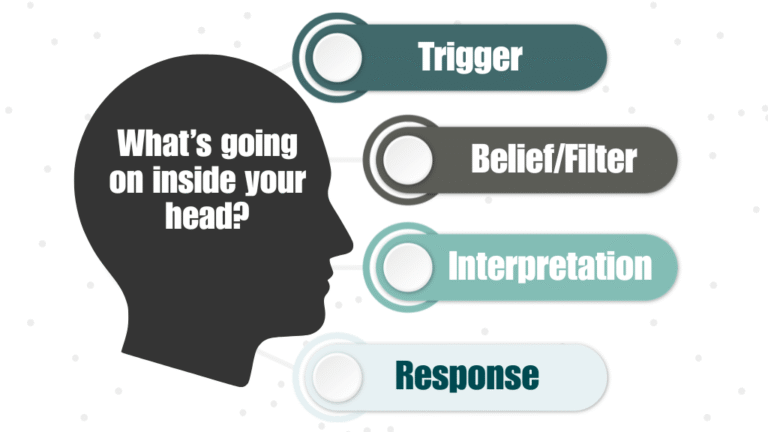
This process explains why two people can experience the exact same trigger and have completely different emotional responses.
So what’s the key insight here?
The trigger isn’t what causes the anger. The belief and interpretation in the middle are what cause it. This is also the part that is entirely within your control. You can’t control your ‘triggers’, but you can control the meaning you give them, which would change your response.
Here’s an example to illustrate the process:
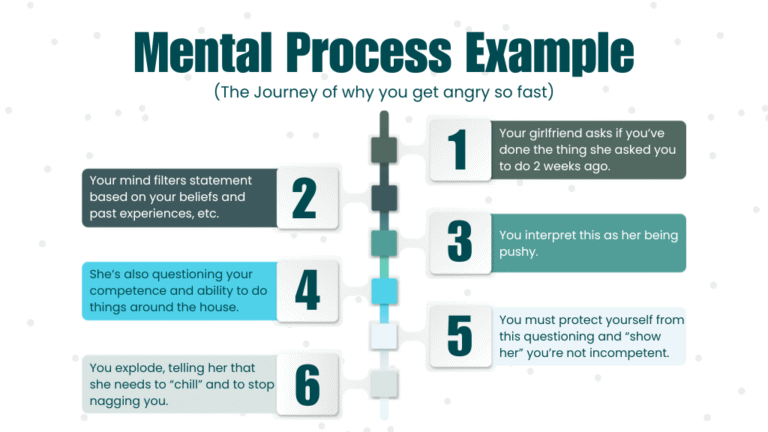
You see, the anger had nothing to do with the actual moment, but had everything to do with your interpretation and belief/filter systems (coupled with an inability to communicate properly that you feel overwhelmed or that something is bothering you).
P.S. This is the reason why almost my entire Anger Management Coaching Program focuses on beliefs and emotional patterns – so that you can resolve the problem at the root instead of spending your life managing your reaction (this method is tiring and will lead to mistakes, because nobody’s perfect, right?)
Anger Management Program
Anger can be a healthy response
Before we get into what you can do about your anger, it’s worth pausing here to clarify something. The goal is never to eliminate anger. In most cases, anger is a healthy, normal human emotion that we all should learn how to experience, interpret and express properly. We were created to feel anger in the first place, which means that it has a purpose. The goal is to understand what it’s telling you, and to choose how you respond to it, rather than simply reacting.
This also explains why suppressing anger doesn’t make it go away. It just sends it ‘underground’, where it tends to show up in other ways: passive aggression, withdrawal, anxiety, physical tension, or sudden explosions over something small. What you’re really looking for is the ability to feel the anger, understand it, and express it in a way that doesn’t cost you your relationships, your self-respect, or your well-being.
How to Calm Down When You're Angry: What You Can Start Doing Now
Understanding why you get angry so fast is already helpful. But you’re probably wondering what you can actually do about it. Here are some practical starting points, and it’s worth knowing that learning how to calm down when you’re angry is a skill. And like all skills, it takes practice to get good at it.
1. Learn to Identify the Emotion Underneath the Anger
After you’ve calmed down from feeling angry, ask yourself: What was I actually feeling before the anger showed up? Was it hurt? Fear? Embarrassment? Just the act of naming and facing that emotion begins to reduce the intensity of the anger.
For example: “I was feeling overwhelmed by a stressful day.” or “I wanted to do something nice for you, but it felt like everything was going wrong and like the day was being ruined.”
2. Build Awareness of Your Personal Triggers
Go back to the trigger categories above and start noticing which ones are most active in your life. The more clearly you can see your patterns, the less power they have. You stop being blindsided and start recognising: “Ah, this is one of my triggers.” That recognition creates a split second of choice, a moment where you actually get some control over the way you interpret what you’re feeling.
*Remember: Meaning Creates Emotion. If you change the meaning you give to a situation, you change the way you respond to it.
3. Create Space Between the Trigger and Your Response
Even a two-second pause can change everything. Press your feet into the floor. Take one slow breath. Say “I need a moment” before responding. Tell your partner, “I’m feeling overwhelmed and frustrated. Can we just take 2 minutes to pause and think before we talk further? I want to be able to talk to you calmly and kindly.” (A reasonable and loving partner would it find it extremely difficult to refuse this request).
4. Work on the Root, Not Just “managing” your anger.
The tools above help you manage your anger response. But if you want to genuinely change how fast and how intensely you get angry, the deeper work is in identifying and shifting the underlying beliefs and patterns that are making you get angry so fast in the first place. That’s where the true, deep and lasting transformation happens.
Wouldn’t you want to work on this problem once in your life, for a couple of months, then never worry about the negative consequences of it ever again?
My Anger Management Program focuses heavily on resolving these anger-driven patterns at the root. Importantly, I help you truly realise, believe and show others that you are more than just a person who gets angry a lot of the time. Learn more about the program here.
You Don't Have to be an "Angry Person" Forever
If you’ve read this far, it’s because you genuinely want to understand yourself better. That desire is not a small thing. Most people with a quick temper never ask why. They either accept it as “just how they are” or they carry the guilt of repeated reactions without ever getting to the root.
But having a “short fuse” is not a personality trait you’re stuck with. It’s a learned pattern, built over time from past experiences, core beliefs, and nervous system responses. And what has been learned can be unlearned. With the right understanding and support, you can change not just how you manage your anger, but how often and how intensely you experience it in the first place.
If you’re ready to go deeper and do that work, I’d love to help. You can book a free discovery session here, and we’ll start getting to the root of what’s really driving your anger, together.